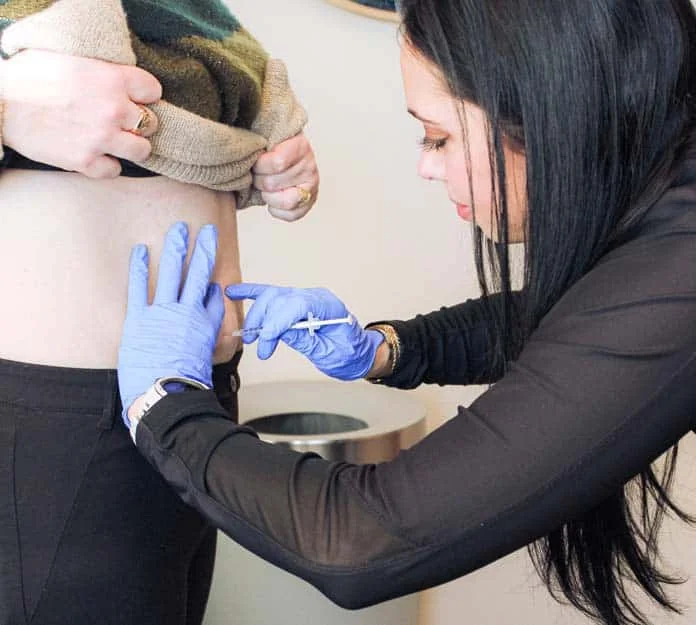

Search the best weight loss injections and you get the same ranked list on every page: tirzepatide beats semaglutide, here are the numbers, the end. That list is not wrong, but it is not how a physician actually chooses your shot. In our Bloomington clinic the decision is not "which drug won the trial." It is "which injection fits this specific patient at this specific starting weight, with this insurance, this gut, and this history." Here is the framework we run at intake, and the four categories it sorts between.
The best weight loss injections, side by side
There are really four categories a patient is choosing among, not a long menu. Two are the GLP-1 medications you have heard of, one is the compounded version of those same molecules, and the fourth is a support injection that is often misunderstood as a weight-loss drug in its own right. Read the table as a map of the terrain, not a ranking. The right one for you depends on the section after it.
Those efficacy figures come from the published trials, not from us: the STEP program reported roughly 10 to 15% body-weight loss for semaglutide injections over 12-plus months, and SURMOUNT-1 reported roughly 15 to 22.5% for tirzepatide injections over 72 weeks. On paper, tirzepatide has the higher ceiling. In the exam room, the higher ceiling is one input out of several, and it is frequently not the one that decides.
Best GLP-1 for weight loss: there is no single answer
If you want the honest version of "best GLP-1 for weight loss," it is that the question is incomplete. Both semaglutide and tirzepatide are GLP-1 based, both are once-weekly self-injections, and both work by quieting appetite and slowing how fast your stomach empties. If you want the mechanism in full, we lay out how GLP-1 injections work separately. The difference that gets all the headlines is that tirzepatide activates a second receptor, GIP, on top of GLP-1, which is why its trial ceiling sits higher.
Defaulting every patient to the strongest drug is not personalization. It is the opposite. The strongest molecule is only the best one for the patients whose profile actually calls for it.
That is the trap in most best-of lists. They rank molecules in a vacuum, as if the patient were a variable you could ignore. A 42-year-old with 25 pounds to lose, a sensitive stomach, and a plan that covers semaglutide is not well served by starting on the highest-ceiling drug because a chart said it "won." The reverse is also true: someone with a large goal who has already stalled on semaglutide is not well served by staying put out of caution. The molecule follows the patient, not a leaderboard.
How we actually choose your injection at intake
Here is the part the encyclopedia pages leave out. When you sit down for a free 15-minute consultation, we are not reaching for the strongest drug on the shelf. We are working through four factors in roughly this order, and the answer falls out of them rather than out of a ranking.

The first injection is a starting hypothesis, not a verdict. Because we run weekly check-ins, the choice is never locked. If semaglutide plateaus, we can step across to tirzepatide on purpose. If side effects flare, we slow the ramp or hold the dose. The decision framework does not end at intake. It runs the whole way through.
Where compounded GLP-1 fits
Compounded semaglutide and tirzepatide are the same active molecules prepared by a compounding pharmacy rather than the brand manufacturer. They matter mainly as an access route: when a brand is in short supply or out of a patient's budget, a compounded version can keep treatment moving. We prescribe and monitor it exactly the way we handle the brand versions, with the same titration discipline and the same weekly check-ins. It is not a shortcut and it is not a different drug. It is the same medicine sourced a different way.
Where B12 and lipotropic injections fit (and where they do not)
This is the category that gets oversold everywhere else, so we will be direct. B12 and lipotropic injections are not weight-loss drugs. They do not suppress appetite and they do not burn fat on their own. What a B12 injection can do, if you are genuinely low, is correct the fatigue that makes people skip workouts and reach for quick calories. That is real, and it supports the work the rest of your plan is doing.
We offer B12 and lipotropic injections as an optional adjunct for interested patients, never as the engine of a weight-loss plan. The engine is a supervised program, the right medication when it is indicated, and sustainable habits. If your B12 is already normal, we will tell you so rather than sell you a shot you do not need.
Why the choice is safer inside a clinic
Regner Health Solutions is a doctor-supervised weight loss clinic in Bloomington, MN, serving Minneapolis, Edina, and the surrounding Twin Cities. We opened in November 2022 and were one of the first Twin Cities clinics to prescribe semaglutide and tirzepatide for weight loss, so the intake framework above is not theory. It is what we have run with patients since these medications became available for weight management here.
The reason the choice belongs in a clinic rather than a mail-order form is that all four decision factors change over time. Your tolerance settles, your coverage shifts, your response to the first molecule tells us something new. An online-only refill cannot act on any of that. Weekly check-ins can, which is why the same patient can start on one injection and finish on another, by design rather than by accident.
Frequently asked questions
Which weight loss injection is most effective?
By trial ceiling, tirzepatide is the strongest: SURMOUNT-1 reported roughly 15 to 22.5% body-weight loss over 72 weeks, versus roughly 10 to 15% for semaglutide in the STEP trials. But "most effective" is not the same as "best for you." The most effective injection is the one you can tolerate, afford, and stay consistent on. For many patients that is semaglutide as a proven first step, with tirzepatide held in reserve if the goal is large or the first molecule plateaus. We match the choice to your profile during a free consultation.
What are the side effects of weight loss injections?
The most common side effects of GLP-1 injections like semaglutide and tirzepatide are gastrointestinal: nausea, constipation, and sometimes fatigue, usually worst in the first week or two after a dose increase and easing as your body adapts. Titrating slowly is how we keep them mild, and holding or lowering the dose is how we manage them when they flare. B12 and lipotropic injections have a different and generally milder profile because they are nutrient support, not appetite-suppressing drugs. We walk through your specific risks based on your history before you start.
Can I switch injections if the first one does not work?
Yes, and it is a normal part of the plan rather than a failure. If you plateau on semaglutide, stepping across to tirzepatide is one of the clearest reasons to change. Because we run weekly check-ins, we can see a stall early and adjust on purpose. The first injection is a starting hypothesis, not a life sentence.
Do I need a B12 injection if I am on a GLP-1?
Not automatically. A B12 injection is worth considering if your bloodwork shows you are low or if fatigue is undermining your consistency, in which case correcting it can make it easier to stay active. If your B12 is already normal, adding a shot will not create a metabolic advantage. We decide it from your labs and how you feel, not from a package.
Not sure which injection fits your starting weight, budget, and history? Book a free 15-minute consultation with our Bloomington medical team. We will run the same framework in this article on your actual numbers and recommend the injection that fits you, not the one that tops a chart. Prefer to talk first? Call (612) 895-7721.