
Most GLP-1 patients don't quit because the medication doesn't work. They quit because side effects showed up in week 3 and nobody helped them manage it. Here's what actually happens, and what we do about it.
Nausea (the most common)
About 30–40% of patients experience mild-to-moderate nausea, especially in the first week of a new dose. It's your gut adjusting to slower motility. It almost always fades within 5–10 days.
What actually helps:
- Small, frequent meals. Not three big ones.
- Protein-forward, easy-to-digest foods. Skip greasy or heavy fats during the first days.
- Stay hydrated. Sipping water throughout the day beats chugging.
- Ginger — tea, candies, or capsules. Genuinely evidence-backed for GLP-1 nausea.
- If it's rough: we prescribe a short course of Zofran (ondansetron). Not a first move, but effective when needed.
- Not helpful: skipping meals. Empty stomach + GLP-1 = worse nausea.
Day 1–3 nausea → dietary changes. Day 4–7 → ginger, hydration coaching. Persistent past 10 days → medication (ondansetron) + we slow the next dose step. Severe or persistent → we hold the current dose or step down. You always have options.
Constipation
Also common, and usually appears a few weeks into treatment as your GI motility slows. Not fun, but manageable.
- Water. Most GLP-1 constipation is dehydration in disguise.
- Fiber — soluble fiber (oats, chia, psyllium) is gentler than raw insoluble fiber.
- Movement. Walking daily helps GI transit.
- Magnesium citrate 200–400mg at bedtime works well for many patients (check with us first if you have kidney concerns).
- MiraLAX (polyethylene glycol) daily as needed — safe and effective long-term.
Diarrhea (less common)
Fewer patients get this, but it happens — often as your body's initial reaction to the medication before slowing. Usually resolves in the first week.
- Hydrate aggressively — electrolyte drinks if needed.
- BRAT diet if severe (bananas, rice, applesauce, toast).
- Avoid dairy, greasy foods, and artificial sweeteners temporarily.
- If it lasts more than 3–4 days, we intervene.
Fatigue
A small number of patients report tiredness during the first week or after a dose step-up. Two common causes: eating too little (calorie deficit is real) or dehydration. If low energy lingers, it is worth checking whether your B12 has slipped. Here is our honest take on B12 injection benefits for energy, including when a shot actually helps and when it will not.
- Track your intake for a few days. Under-eating is more common than patients think when appetite is suppressed.
- Prioritize protein — 80–100g/day for most adults.
- Salt matters. Low sodium + rapid weight loss = fatigue.
- Sleep. Weight loss and better sleep reinforce each other.
Injection site reactions
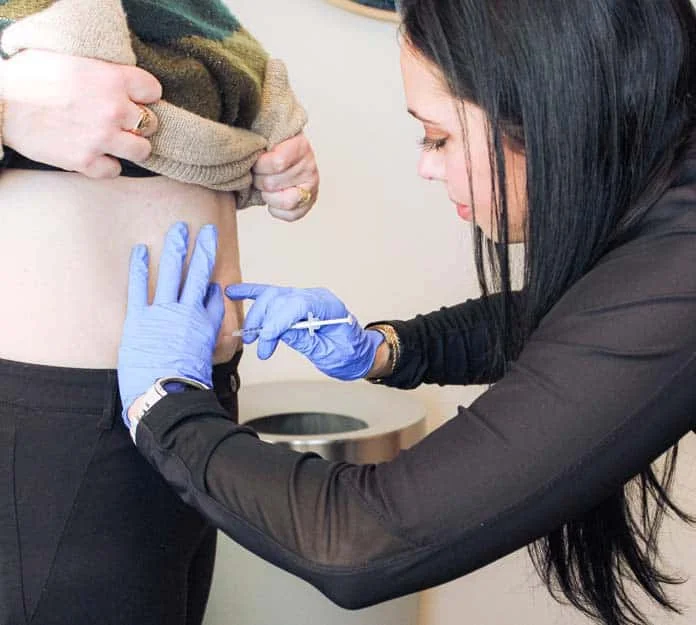
Minor redness, itching, or a small welt at the injection site is normal and resolves within a day or two. Rotate injection sites — abdomen, thigh, upper arm — and don't inject the same spot two weeks in a row.
Persistent or spreading redness, warmth, or pain: contact us. This is rare but we take it seriously.
"Ozempic face" — the hollowed-look concern
The internet worries a lot about "Ozempic face" — the sunken cheek and neck appearance some patients get with rapid weight loss. Two things to know:
First: it's not caused by GLP-1 medications specifically. Rapid weight loss from any source (surgery, extreme dieting, illness) can produce facial volume changes.
Second: slower is better. When we titrate dose gradually and target sustainable weight loss (1–2 lbs per week for most patients), facial changes are usually much less pronounced.
The safest, best-looking, longest-lasting weight loss is steady weight loss. We calibrate for that on purpose.
Rare but serious: what to call us about immediately
Very rare but real risks with GLP-1 medications:
- Pancreatitis: severe abdominal pain radiating to your back, especially with nausea. Call us or seek care immediately.
- Gallstones/gallbladder issues: right-upper-quadrant abdominal pain, especially after fatty meals. Report to us.
- Severe allergic reaction: hives, swelling, breathing difficulty. Emergency care immediately.
- Thyroid changes: new lumps in your neck, difficulty swallowing, persistent hoarseness. Report to us.
How this is different at Regner
Every side effect above is manageable when you have a physician to call when it shows up. Online GLP-1 services are cheaper up front because they minimize physician involvement — that's exactly why so many of their patients quit.
At Regner, weekly check-ins mean we catch and manage side effects before they become reasons to stop. Nausea in week 3? We fix it in week 3. Constipation month 2? Handled the same week. That continuous supervision is what makes GLP-1 therapy actually sustainable.
Considering GLP-1 therapy and worried about side effects? Book a free 15-minute consultation. We'll walk through your specific concerns honestly.