Every weight loss program eventually gets to "you need to exercise more." Most of them then prescribe programs that fail within 6 weeks. Here's what physical activity actually looks like for a Bloomington patient who wants sustainable results — not another gym membership they'll cancel in February.
The exercise-for-weight-loss myth
Popular culture treats exercise as the primary lever for weight loss. It's not. Diet — specifically calorie intake — is far more impactful for weight change. A 30-minute jog burns about 250 calories. That's less than a bagel with cream cheese.
What exercise does do — and this is what actually matters — is protect lean mass during weight loss, improve insulin sensitivity, boost mood, sleep quality, and cardiovascular health, and dramatically reduce weight regain after you've reached your goal. Those are the reasons regular physical activity matters, not scale numbers.
Understanding this changes what "regular physical activity" should look like: consistent, sustainable, and calibrated to what you can actually maintain — not what looks good on Instagram.
What regular physical activity actually means
The clinical definition per the U.S. Department of Health guidelines: 150 minutes of moderate-intensity aerobic activity per week + 2 sessions of strength training. That's roughly 22 minutes of movement per day.
"Moderate intensity" doesn't mean punishing. If you can carry on a conversation but not sing, you're in the right zone. A brisk walk qualifies. A slow bike ride qualifies. Dancing around the kitchen while cooking qualifies.

Why most exercise programs fail
Three failure patterns we see constantly:
1. Too much, too soon
Person hasn't exercised in years. Signs up for CrossFit five days a week. Sore, exhausted, and hurt within two weeks. Quits by week three. This is by far the most common pattern.
Better approach: start with 10 minutes of walking a day. Increase by 5 minutes per week until you hit 30. Once that's automatic, add strength training. Nothing dramatic. Sustainable is the point.
2. All-or-nothing exercise thinking
"I couldn't do a full workout today, so I did nothing." Ten minutes is better than nothing. Two minutes is better than nothing. A single set of pushups counts. Perfectionism kills consistency.
3. Punishment framing
Exercising "to burn off" a meal or "to earn" food creates a punitive relationship with movement that virtually no one sustains. Reframe: exercise is for how you'll feel tomorrow — better sleep, more energy, better mood, easier movement — not for what you ate today.
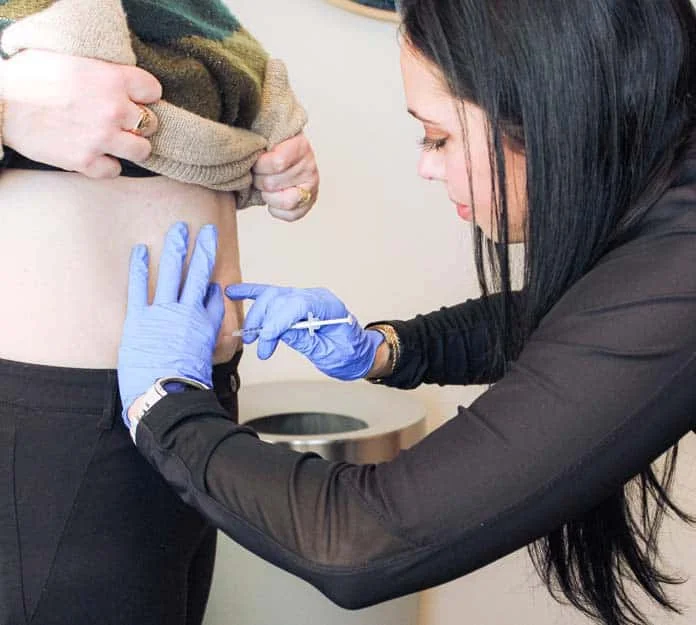
The synergy between physical activity and GLP-1 therapy is real. Weight loss on GLP-1 alone can produce some lean mass loss. Adding regular strength training preserves lean mass, improves body composition, and produces meaningfully better outcomes than either intervention alone.
What we recommend for GLP-1 patients
Realistic movement guidelines tuned to what our patients actually sustain:
- Weeks 1–4: 15-minute walk most days. That's it. Focus is getting used to the medication.
- Weeks 5–12: 20–30 minute walk most days. Add 2 short strength sessions per week — bodyweight movements at home (squats, wall pushups, planks) count.
- Month 3+: 30 minutes moderate activity most days. 2–3 strength sessions per week. Optional: try new activities — hiking, cycling, group classes — to find what you enjoy.
- Maintenance: whatever combination you can sustain long-term. Consistency matters more than intensity forever.
Strength training is non-negotiable
If we could only prescribe one type of exercise for weight loss patients, it would be strength training — not cardio. Reasons:
- Preserves lean muscle mass during weight loss (huge for body composition)
- Boosts resting metabolism (small effect, but compounds)
- Improves insulin sensitivity (compounds with GLP-1)
- Protects bone density (matters especially for perimenopausal patients)
- Improves functional strength (real-life benefit: stairs are easier)
Two 30-minute sessions per week is enough to see meaningful gains. Bodyweight movements work. You don't need a gym membership, though gyms can help with accountability and access to progressive resistance.
The best exercise plan is the one you'll still be doing in 12 months. Everything else is theater.
What to actually do this week
If you're on GLP-1 therapy (or starting soon) and want to build sustainable activity:
- Pick a walking route you enjoy — parks, neighborhoods, a treadmill with a good podcast
- Aim for 3 walks of 15 minutes this week. That's 45 minutes total.
- Add one 15-minute strength session (bodyweight, YouTube video, whatever)
- Do it again next week
- Increase by 5–10 minutes total per week until you hit your goal
Boring? Yes. Effective? Absolutely. Sustainable? For most patients, yes.
Starting GLP-1 therapy and want a physical activity plan calibrated to your body? Book a free 15-minute consultation. We build sustainable activity guidance into every treatment plan.