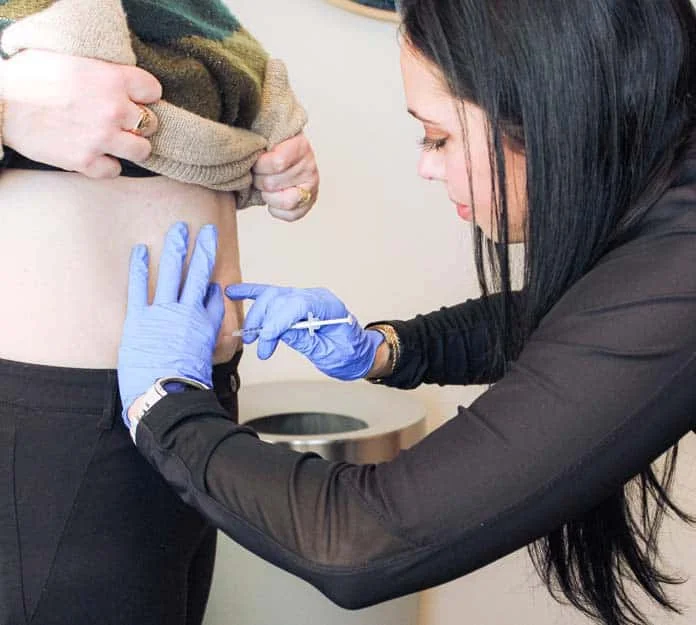

Semaglutide (sold as Ozempic and Wegovy) has produced dramatic weight loss results for millions of patients. It has also produced a lot of internet horror stories about side effects. Here\'s the honest breakdown: what side effects actually occur, how common they are, and what our Bloomington medical team does to manage them.
The common ones — what 20-40% of patients experience
Nausea
The most common side effect. About 30–40% of semaglutide patients experience mild-to-moderate nausea, especially during the first week of a new dose. It\'s your gut adjusting to slower motility. Almost always fades within 5–10 days.
What actually helps:
- Small, frequent meals — not three big ones
- Protein-forward, easy-to-digest foods; skip heavy fats during the first days
- Stay hydrated — sip throughout the day rather than chugging
- Ginger — tea, candies, or capsules. Evidence-backed for GLP-1 nausea
- If it\'s rough: we prescribe a short course of Zofran (ondansetron). Effective when needed
- Not helpful: skipping meals. Empty stomach + semaglutide = worse nausea
Constipation
Also common. Usually appears a few weeks in as your GI motility slows. Manageable with hydration, soluble fiber (oats, chia, psyllium), movement, and MiraLAX or magnesium if needed.
Diarrhea
Less common — some patients get it during the first week before slowing sets in. Usually resolves quickly.
Fatigue
Small number of patients report tiredness during dose ramp-ups. Common causes: eating too little (calorie deficit is real), dehydration, or low salt intake. Fix: track your intake, prioritize protein (80-100g/day), add salt.
Every side effect above is manageable. What matters is whether you have a physician to call when it shows up. Online semaglutide services minimize physician involvement to cut costs — which is exactly why so many of their patients quit at week 3-4. Our weekly check-ins catch and manage side effects before they become reasons to stop.
Injection site reactions
Mild redness, itching, or a small welt at the injection site is normal and resolves within a day. Rotate injection sites (abdomen, thigh, upper arm) and don\'t inject the same spot two weeks in a row.
Persistent or spreading redness, warmth, or pain: contact us. This is rare but we take it seriously.
The "Ozempic face" concern
The internet worries a lot about "Ozempic face" — the sunken cheek appearance some patients get with rapid weight loss. Two things:
First, it\'s not caused by semaglutide specifically. Rapid weight loss from any source (surgery, extreme dieting) can produce facial volume changes.
Second, slower is better. When we titrate dose gradually and target sustainable weight loss (1–2 lbs per week), facial changes are usually much less pronounced. We calibrate for this on purpose.
The rare ones — what to call us about immediately
- Pancreatitis: severe abdominal pain radiating to your back, especially with nausea. Rare but real. Call us or seek emergency care immediately.
- Gallstones or gallbladder issues: right-upper-quadrant pain, especially after fatty meals. Report to us.
- Severe allergic reaction: hives, swelling, breathing difficulty. Emergency care immediately.
- Thyroid changes: new neck lumps, difficulty swallowing, persistent hoarseness. Report to us. Semaglutide has a black-box warning for potential thyroid tumors based on rodent studies — human data doesn\'t show elevated risk, but we screen carefully.
Who should NOT take semaglutide
Contraindications are rare but strict:
- Personal or family history of medullary thyroid carcinoma
- Multiple Endocrine Neoplasia syndrome type 2 (MEN2)
- Personal history of pancreatitis
- Pregnancy or breastfeeding
We screen for all of these during your free consultation before any prescription.
Comparing to alternatives
Wondering whether tirzepatide would have fewer side effects? Read our semaglutide vs tirzepatide comparison. Wondering if lifestyle-only interventions could work? Read medical weight loss vs diet programs.
Considering semaglutide and worried about side effects? Book a free 15-minute consultation. We\'ll walk through your specific concerns and honestly assess whether the treatment is right for you.